For the past three years I have co-curated with the exhibition portion of the Electronics Faire with Ollie Goss. For more information about electronics faire, please visit the official electronics faire website.
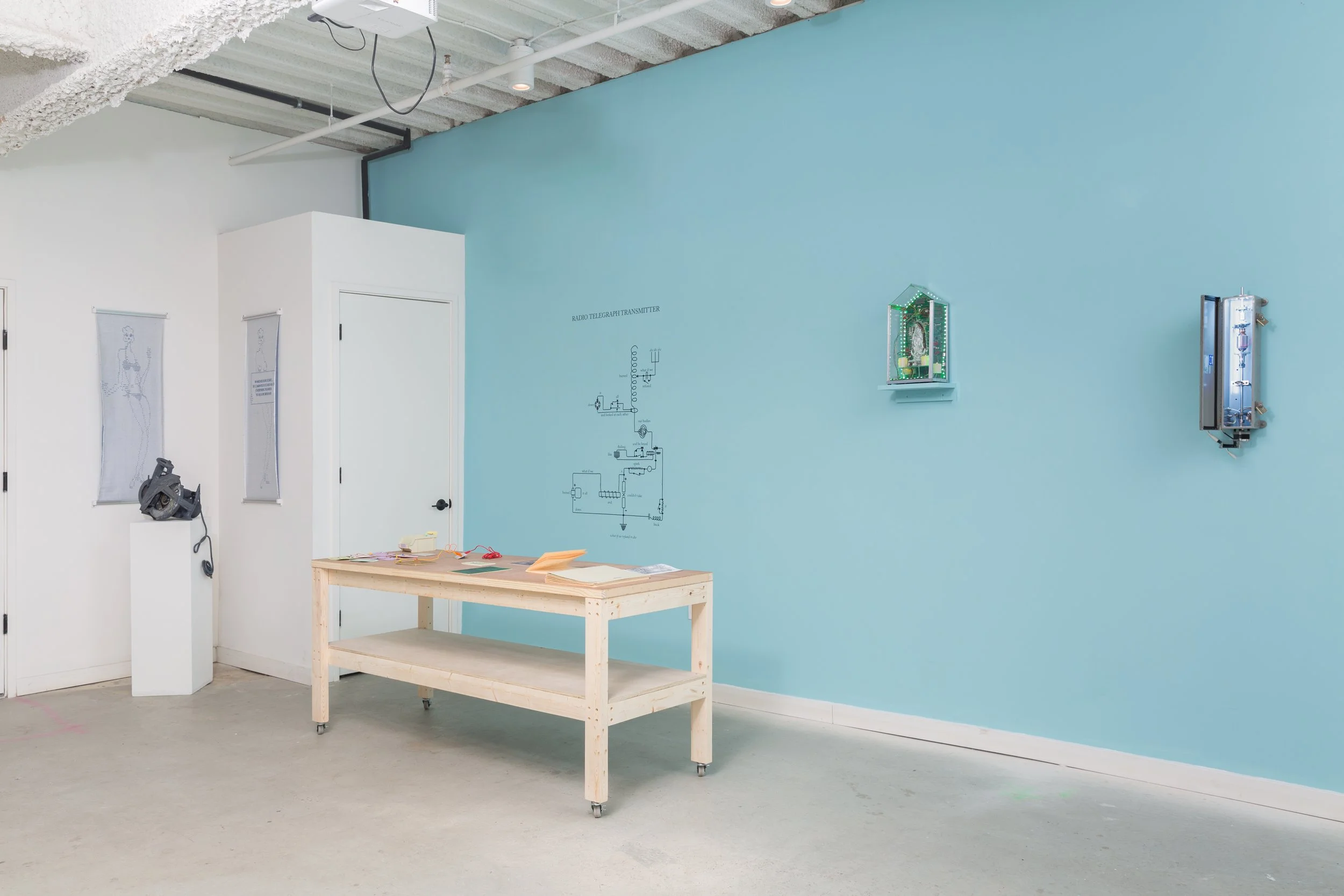
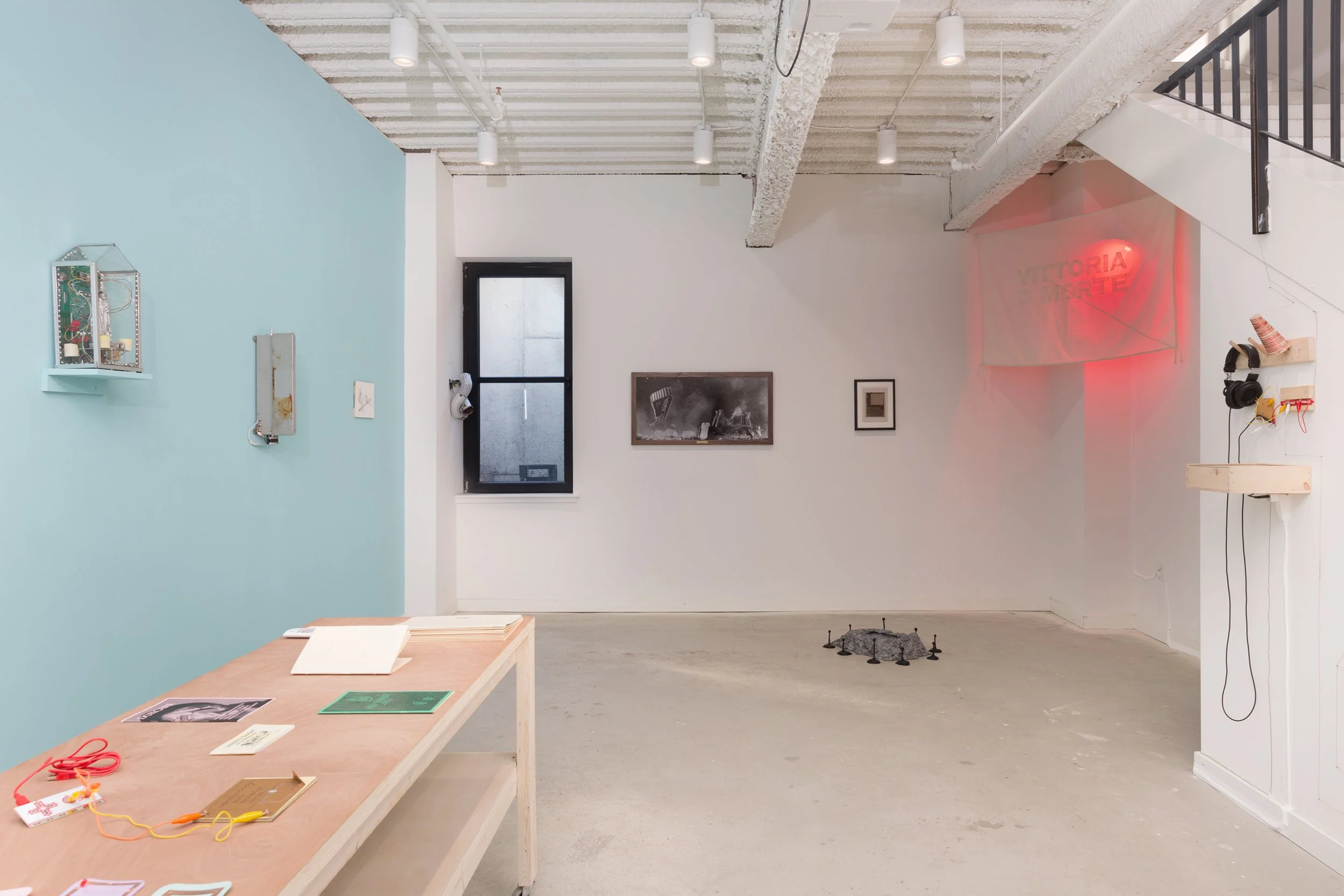
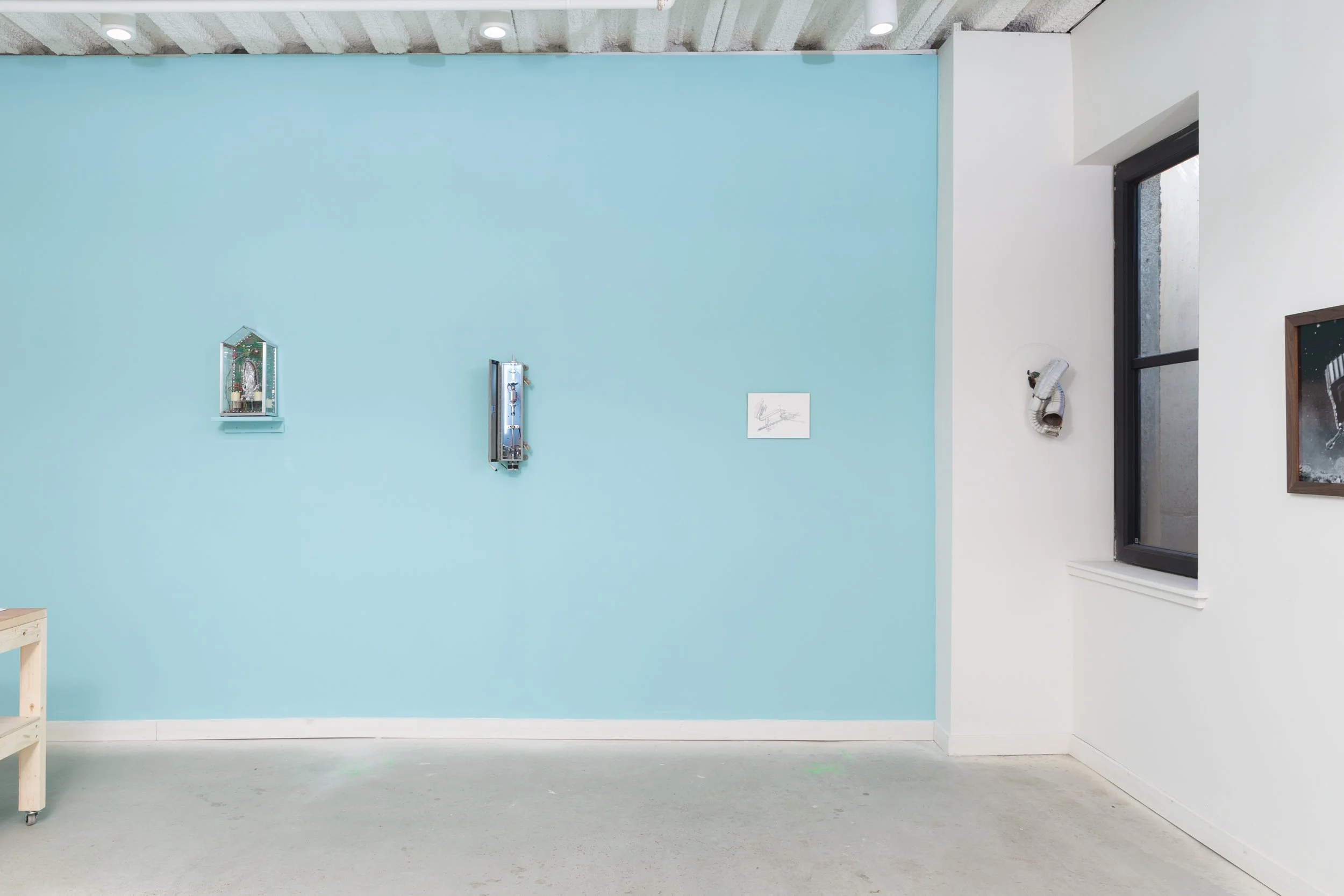
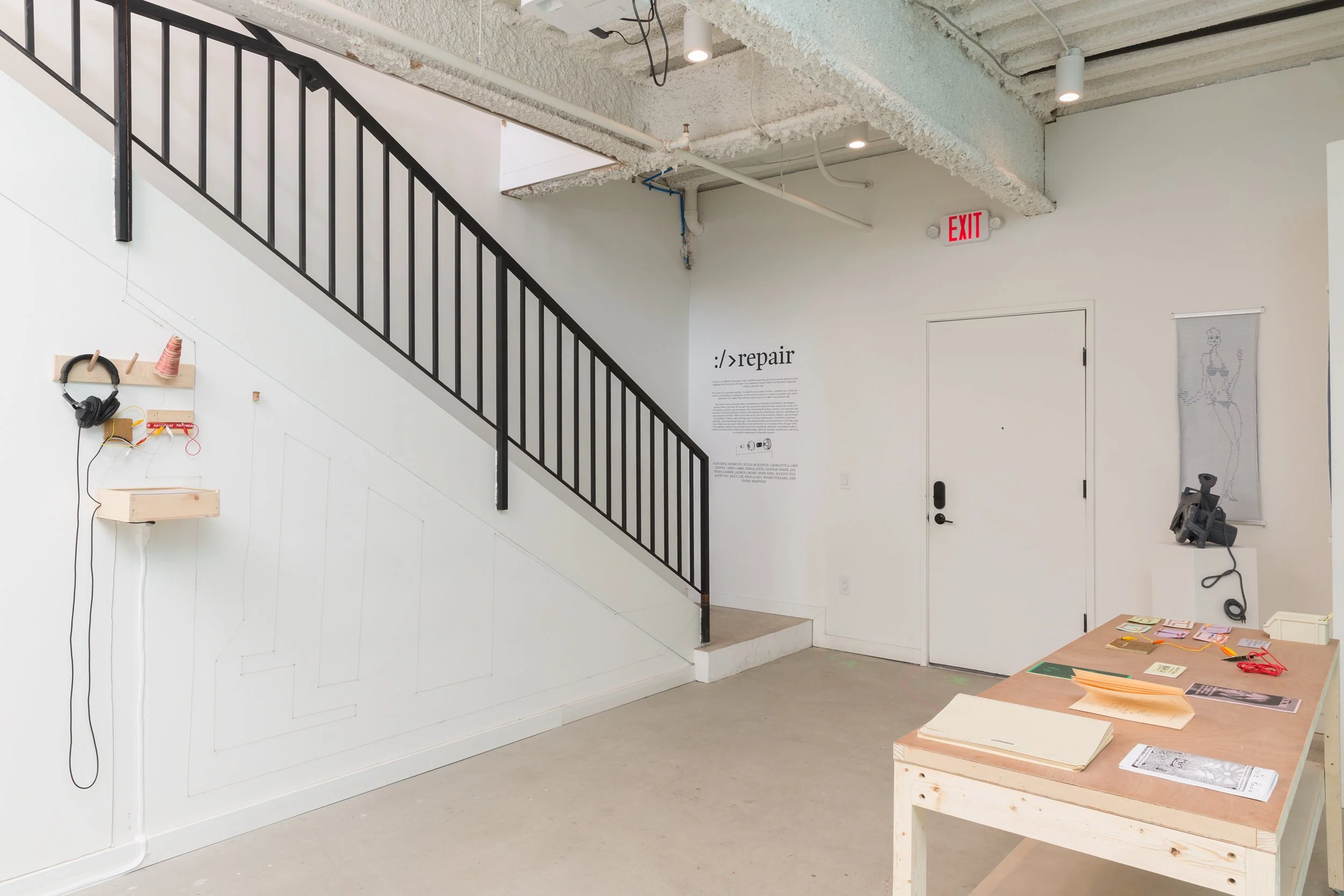
:/>repair at Ulises
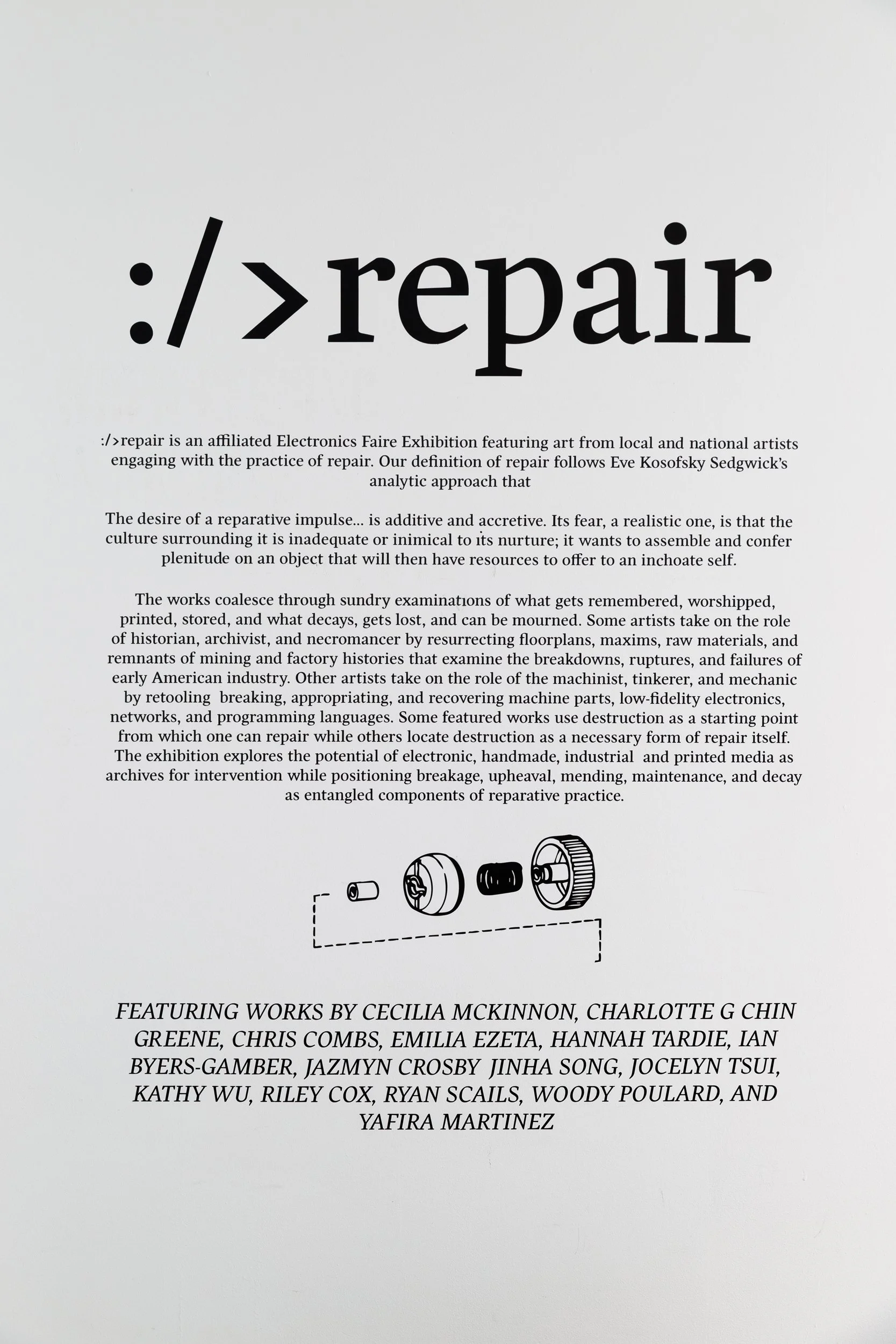
The exhibition theme follows the Electronics Faire founding principle that while the history of electronics is entangled with violence, manifold traditions of marginalized communities using electronics as a form of social relating, intimacy, and resistance continue to flourish. Following mending movements and care cultures, we called for works that engage with repair as a maintenance protocol, cultural practice, and queer and abolitionist methodology. Our definition of repair follows Eve Kosofsky Sedgwick’s analytic approach that
The desire of a reparative impulse… is additive and accretive. Its fear, a realistic one, is that the culture surrounding it is inadequate or inimical to its nurture; it wants to assemble and confer plenitude on an object that will then have resources to offer to an inchoate self.
The works coalesce through sundry examinations of what gets remembered, worshipped, printed, stored, and what decays, gets lost, and can be mourned. Some artists take on the role of historian, archivist, and necromancer by resurrecting floorplans, maxims, raw materials, and remnants of mining and factory histories that examine the breakdowns, ruptures, and failures of early American industry. Other artists take on the role of the machinist, tinkerer, and mechanic by retooling, breaking, appropriating, and recovering machine parts, low-fidelity electronics, networks, and programming languages. Some featured works use destruction as a starting point from which one can repair while others locate destruction as a necessary form of repair itself. The exhibition explores the potential of electronic, handmade, industrial, and printed media as archives for intervention while positioning breakage, upheaval, mending, maintenance, and decay as entangled components of reparative practice.
Participating Artists: Cecilia McKinnon, Charlotte G Chin, Chris Combs, Emilia Ezeta, Hannah Tardie, Ian Byers-Gamber, Jazmyn Crosby, Jocelyn Tsui, kathy wu , Riley Cox, Ryan Scails, Woody Poulard, and Yafira Martinez
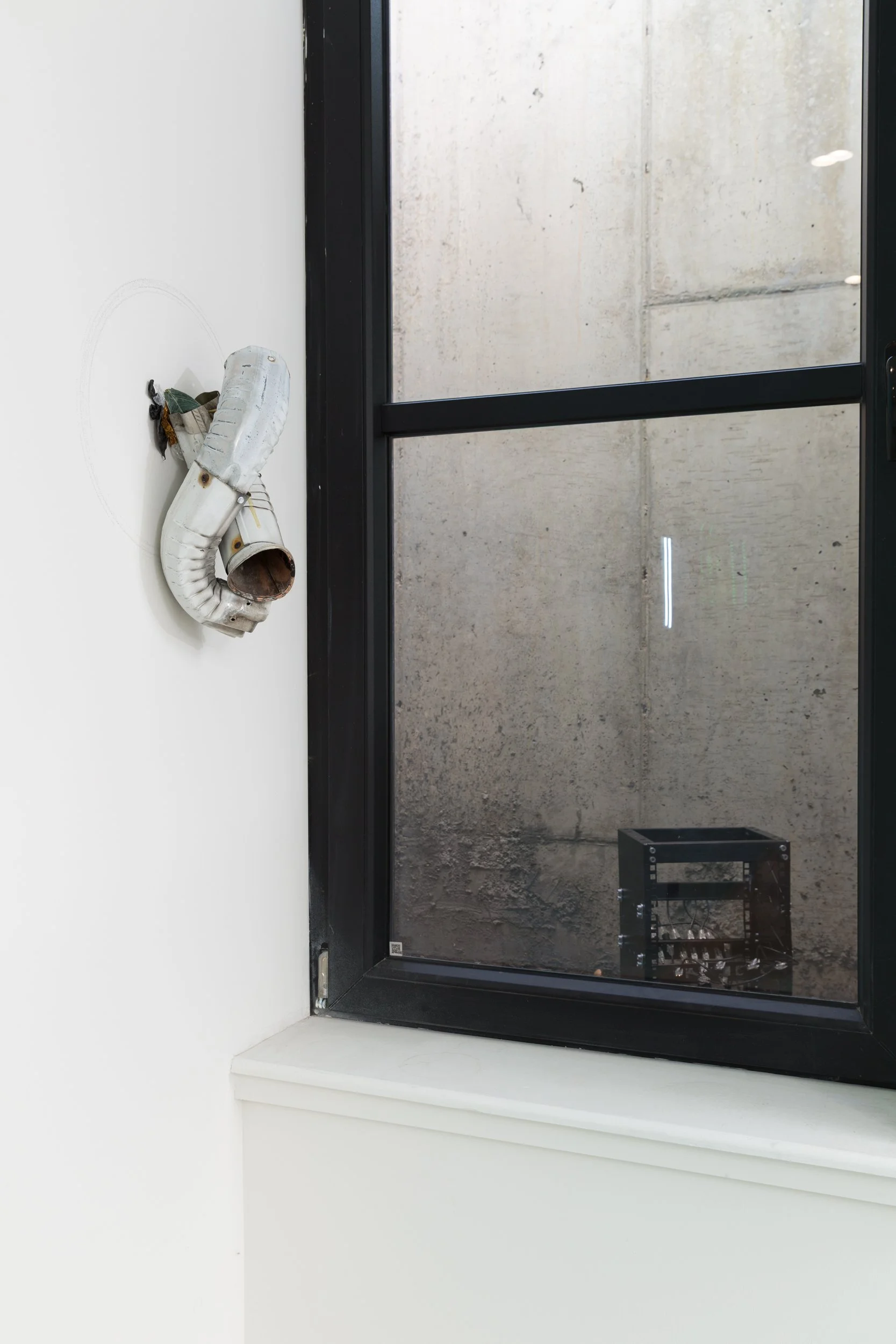
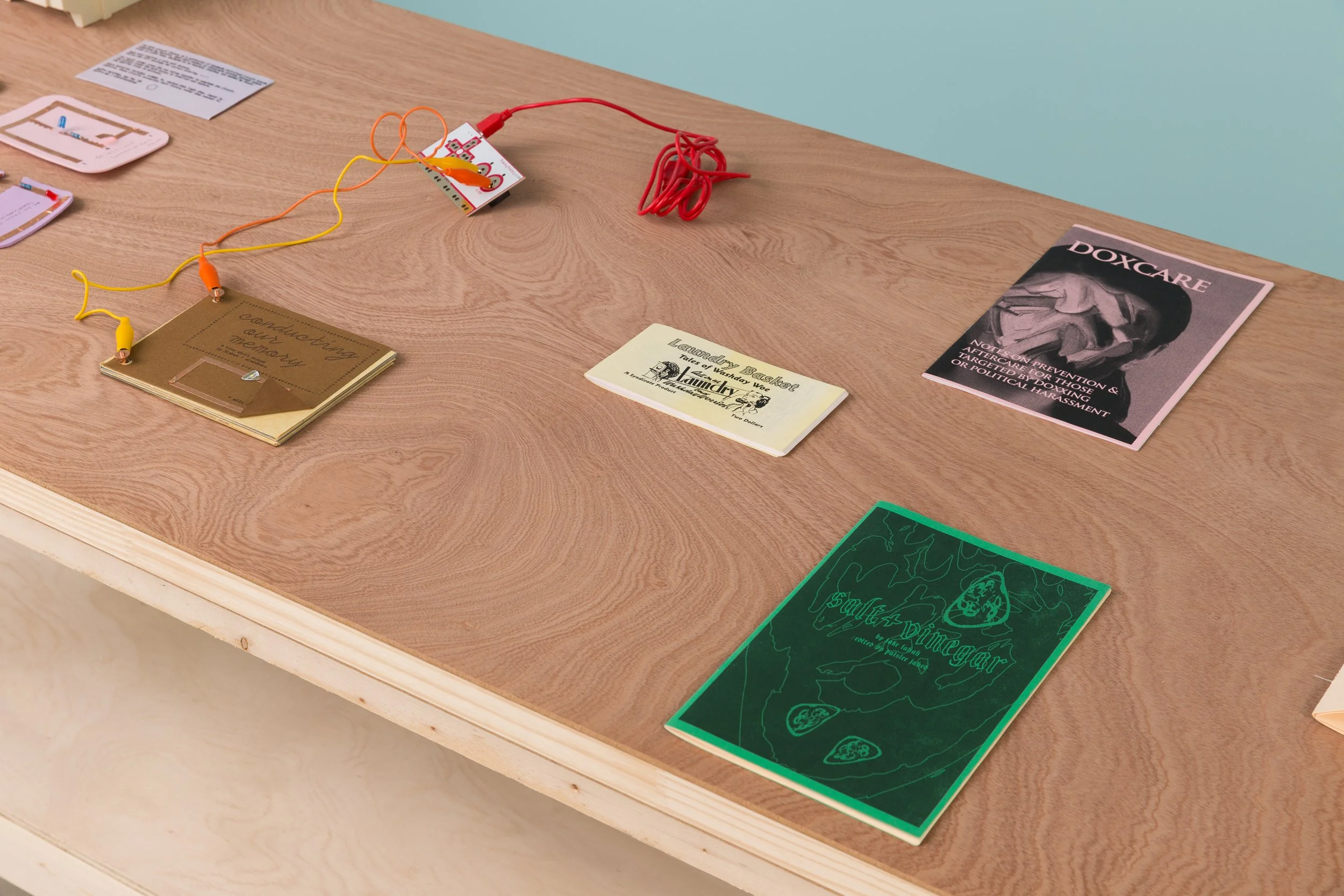
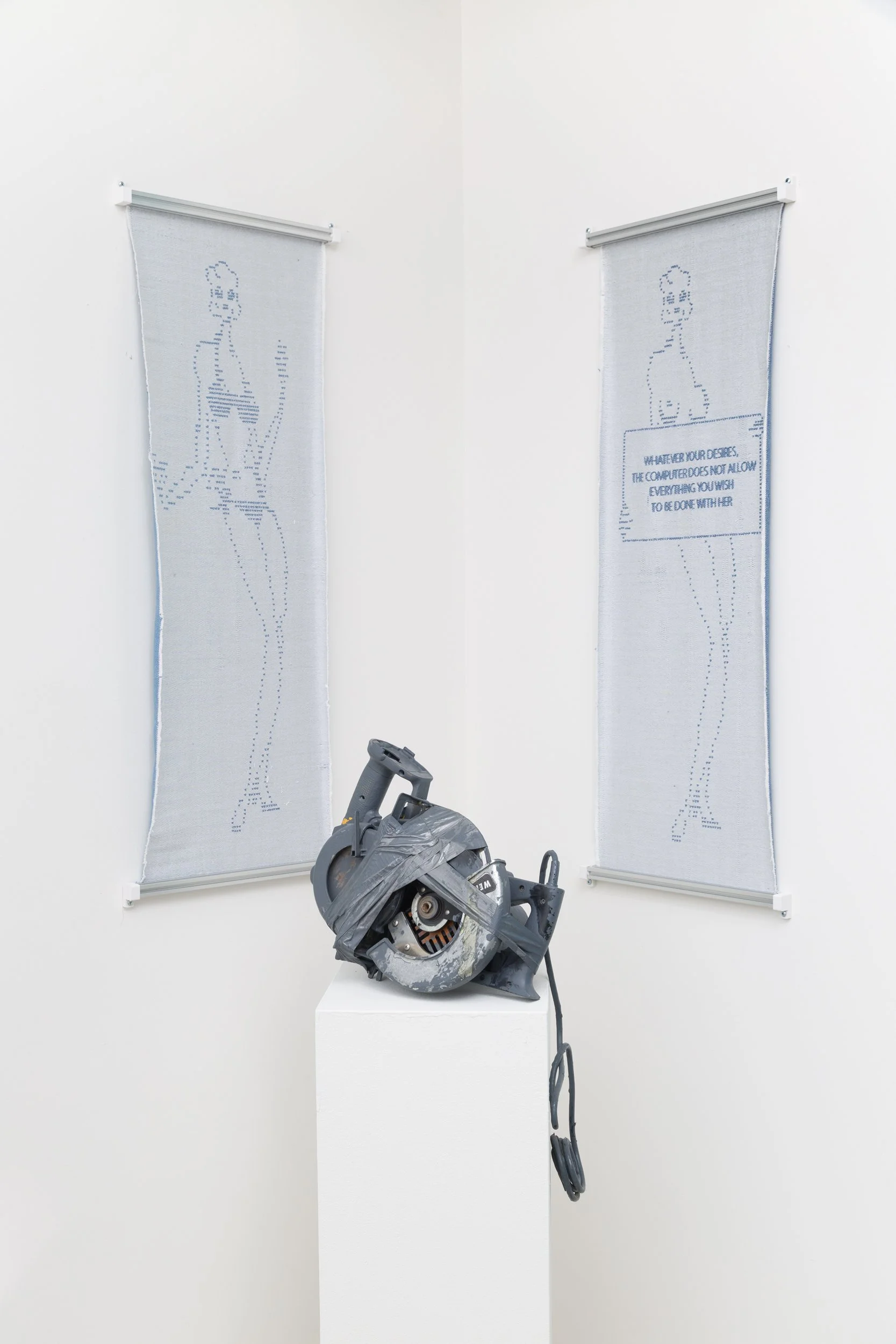
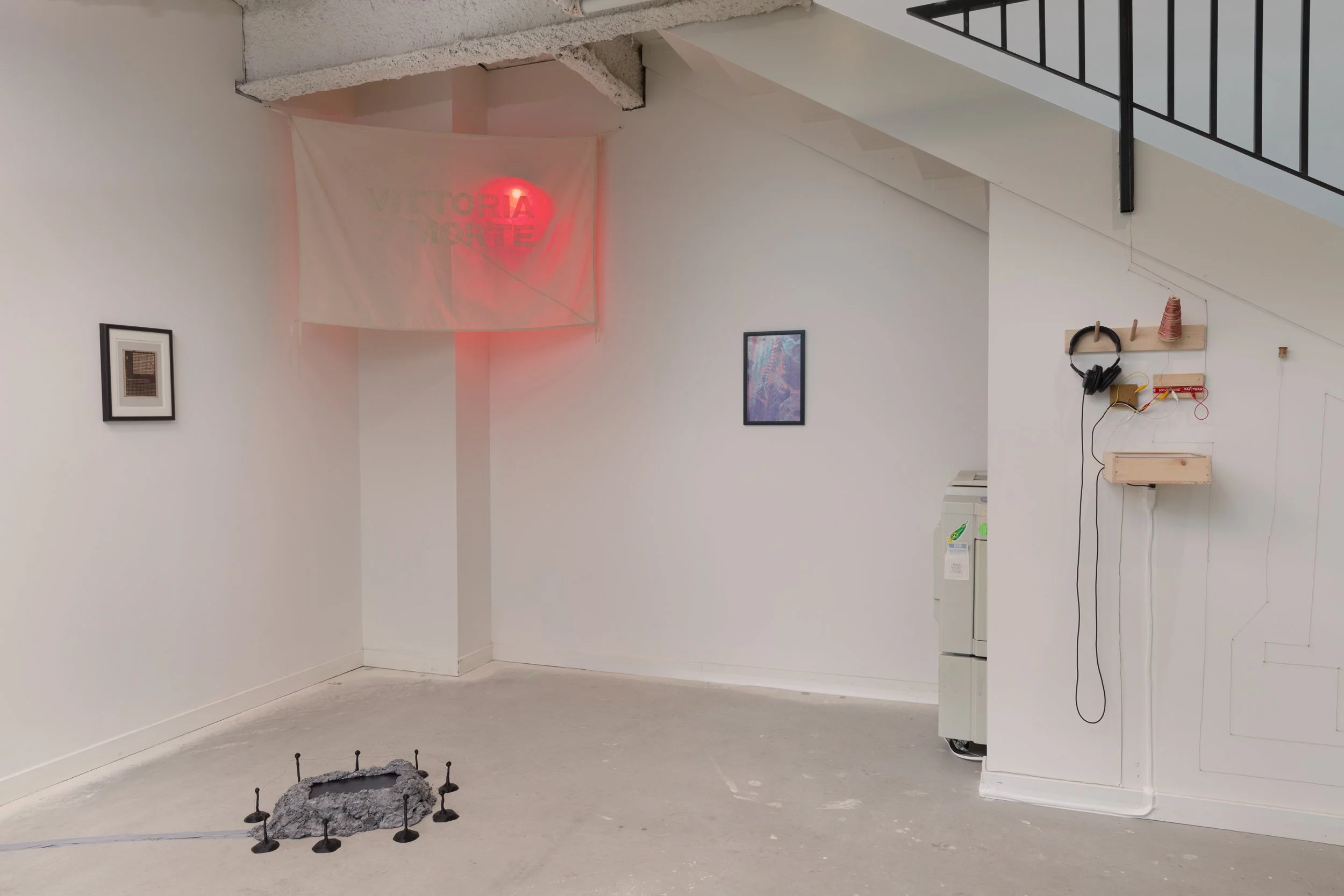
Low Tech at Huddle
There’s tension in the premise of a Low Tech exhibition. By name low tech inverts the value system commonly ascribed to technology away from production method, service, and commodity towards something else. This inversion can be a framework, a feeling, a number, and all else that exists in the shared fantasy in which technology is no longer tethered to structural violence. This fantasy is ambivalent to technological advancement; it sutures time by recovering that which was lost, forgotten, and left behind by positioning them as something relevant. Low Tech is not a consequence but rather a point of inquiry.
The exhibition assembles work from fourteen artists working in a variety of media. Many works are made from recovered materials, such as wood thrown away during industrial elevator construction, unaccounted data from modern image processing, image transfer negatives, and the electronics inside of a broken insulin pump. Others display a panoply of technological methods and outcomes such as antique electronic phones, handmade electronic instruments, bone conduction, hand-altered film for motion pictures, and low powered devices. The curation of pieces in the show is an offering to indulge in the tension held by Low Tech and maybe even join in our fantasy.
With work from: Catia Colagioia, Charlie Manion, David Rios, Francesca Lally, Gregory Kramer, Hannah Tardie, Jamison Mead, Jazmyn Crosby, Kelly Chen + Caleb Chase, Logan Crompton, Maddie Brucker, Noah Kernis, Ollie Goss, Cristhian Varela and Rachael Henson.


