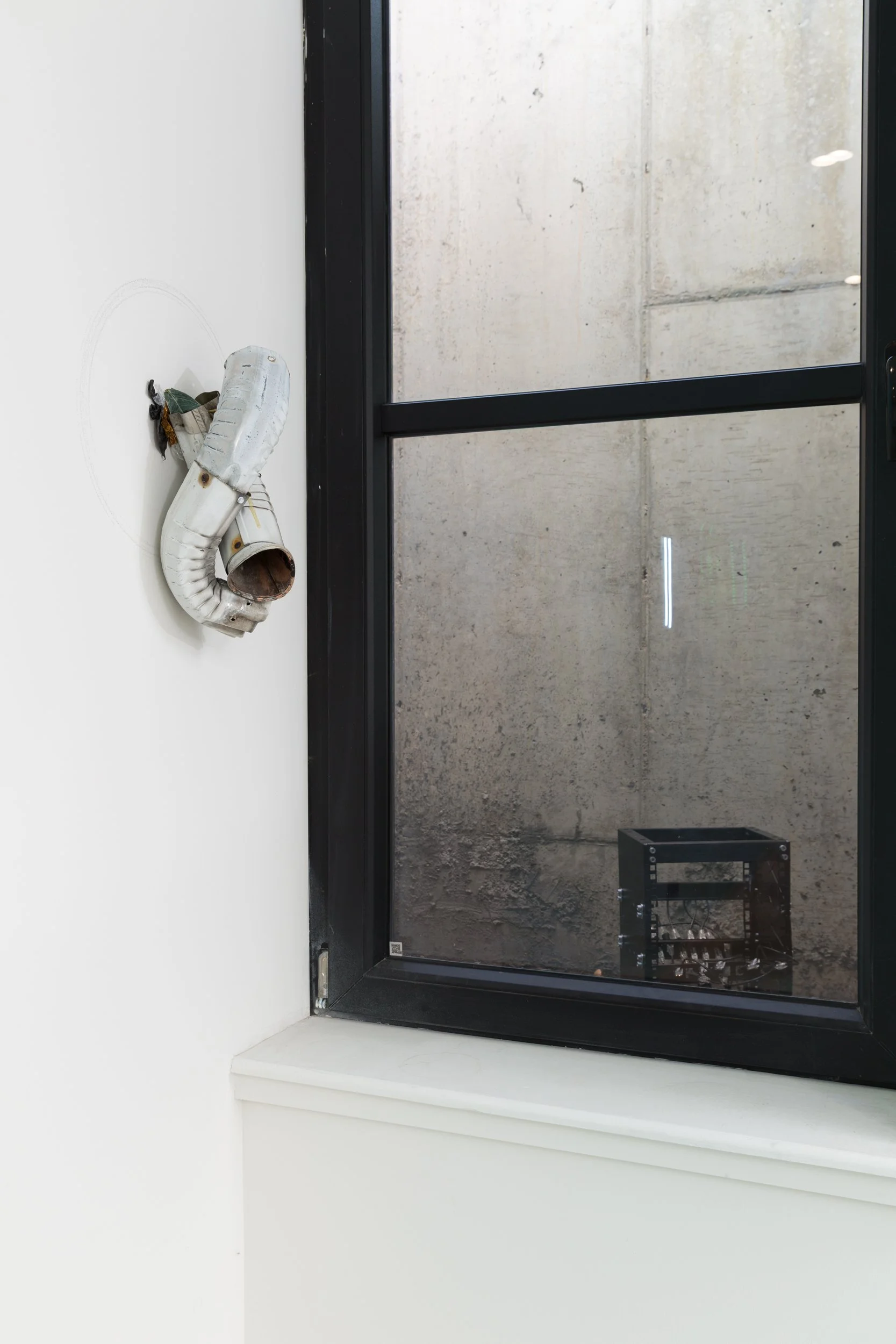
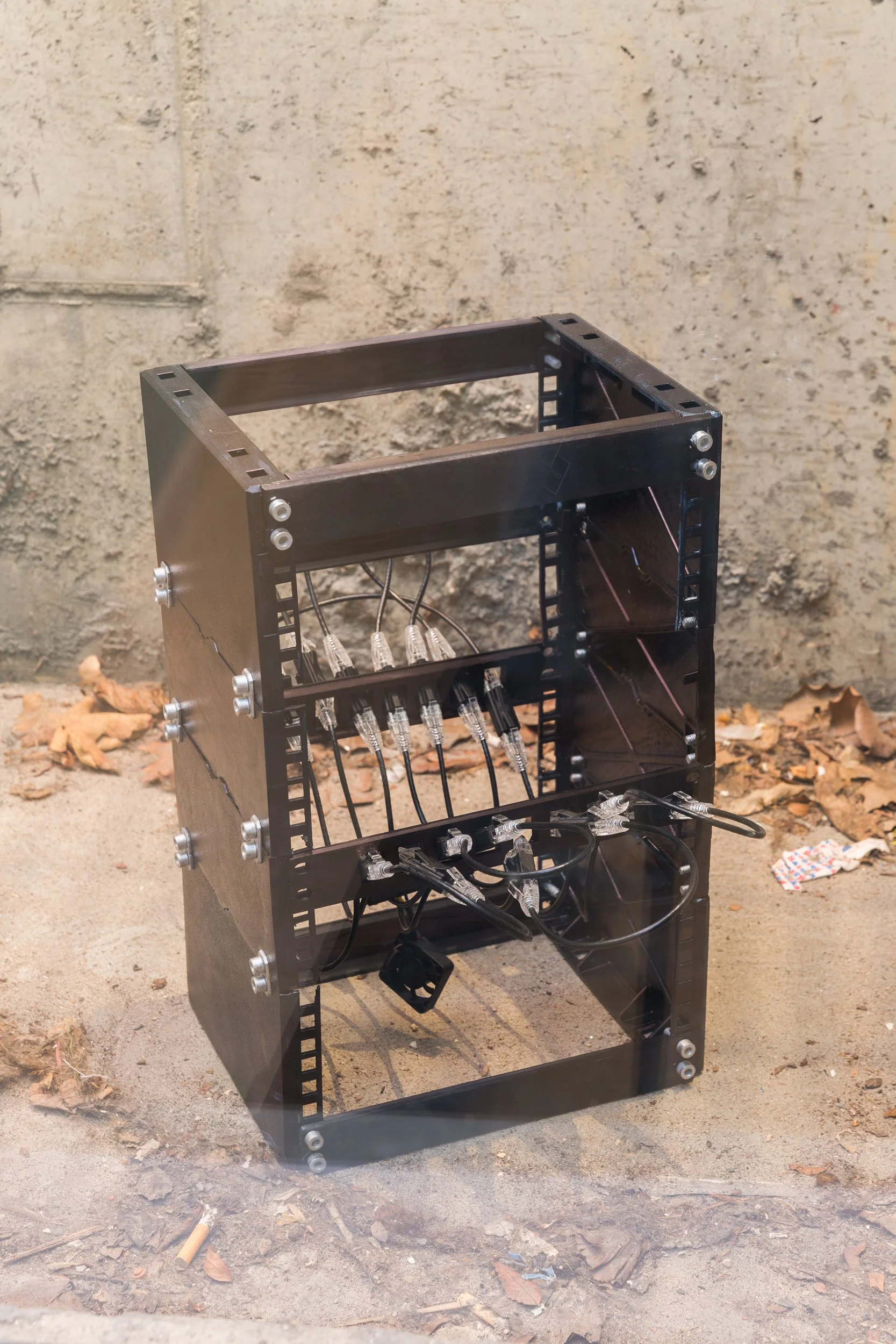
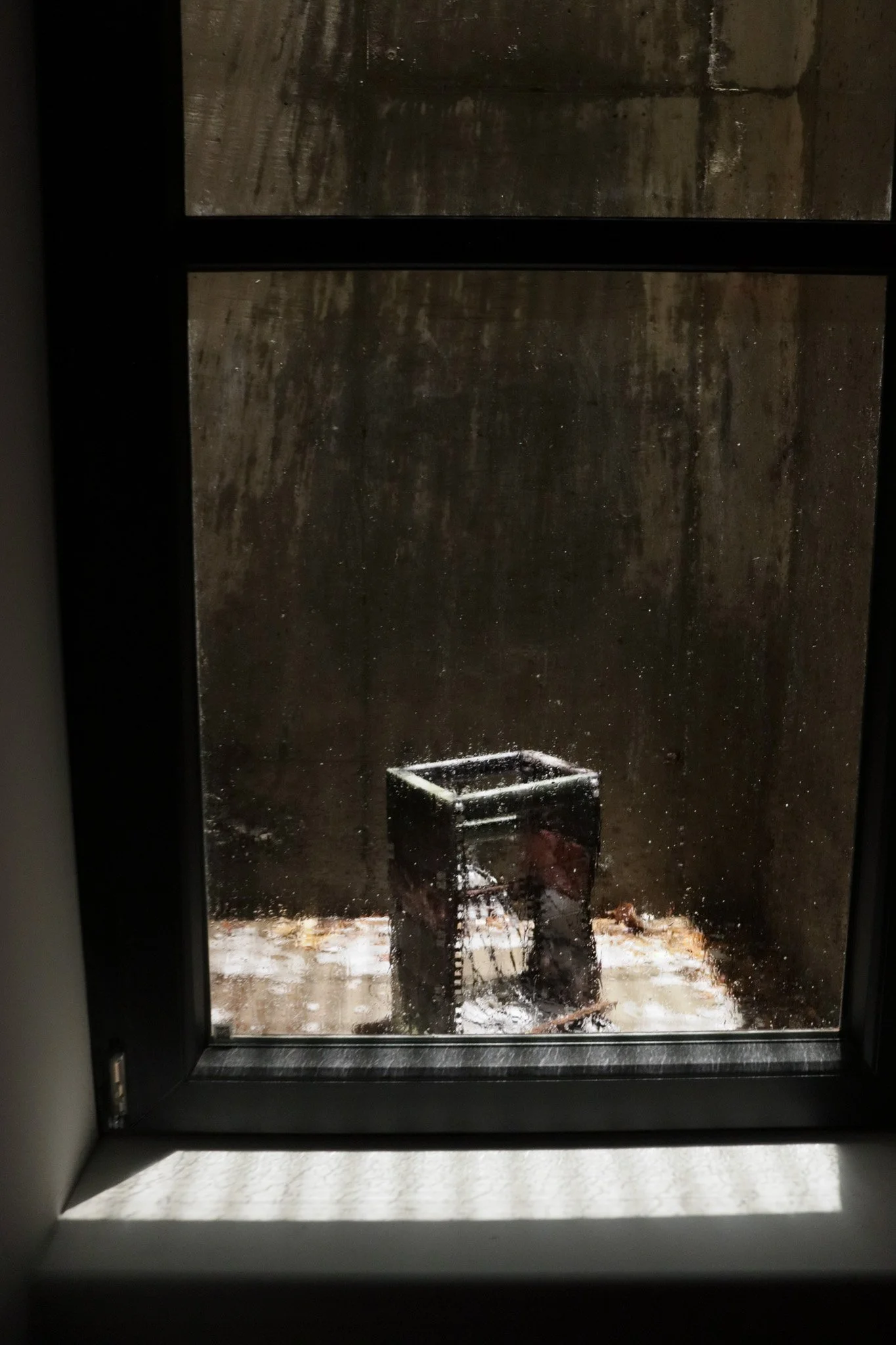
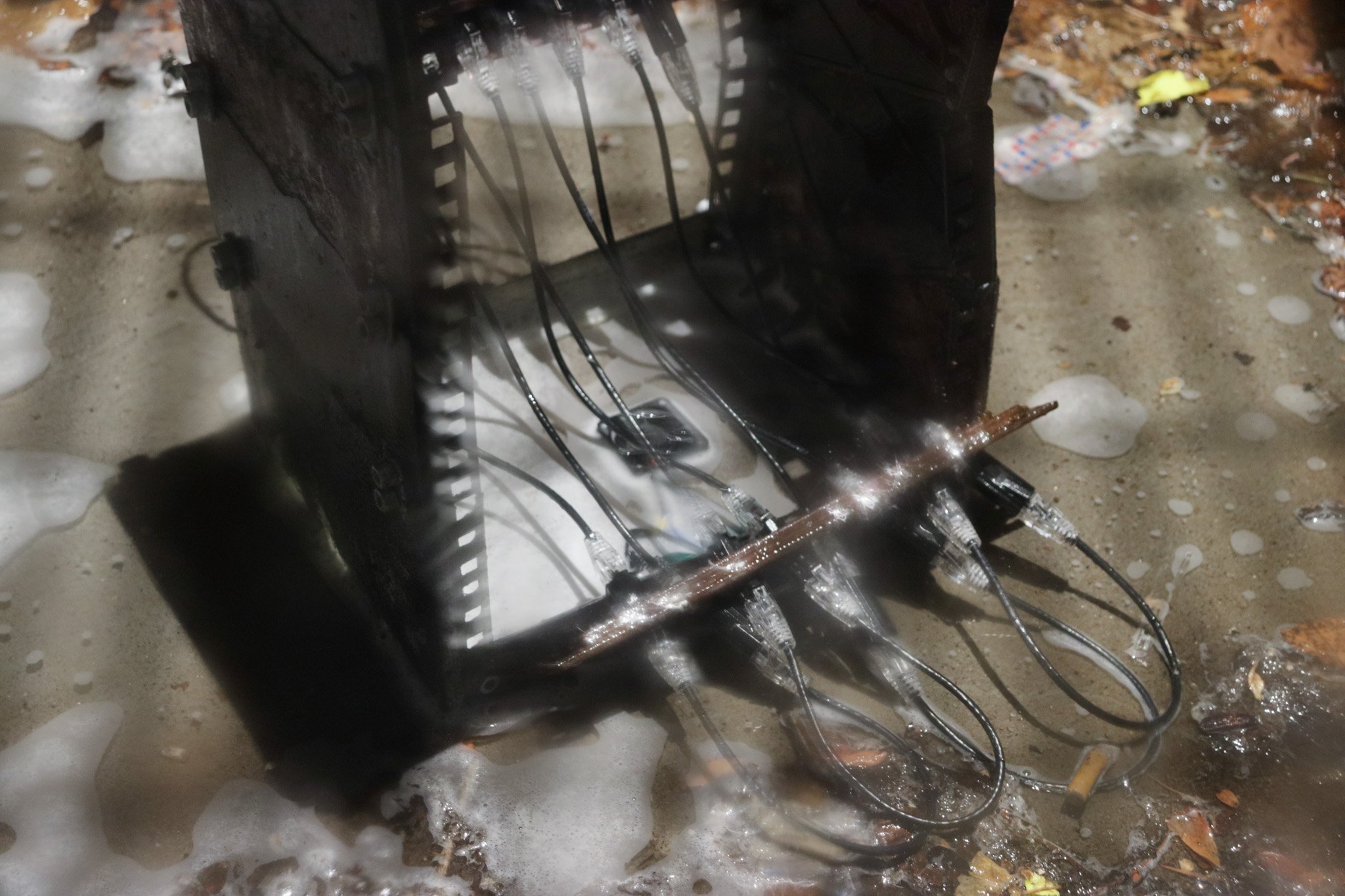
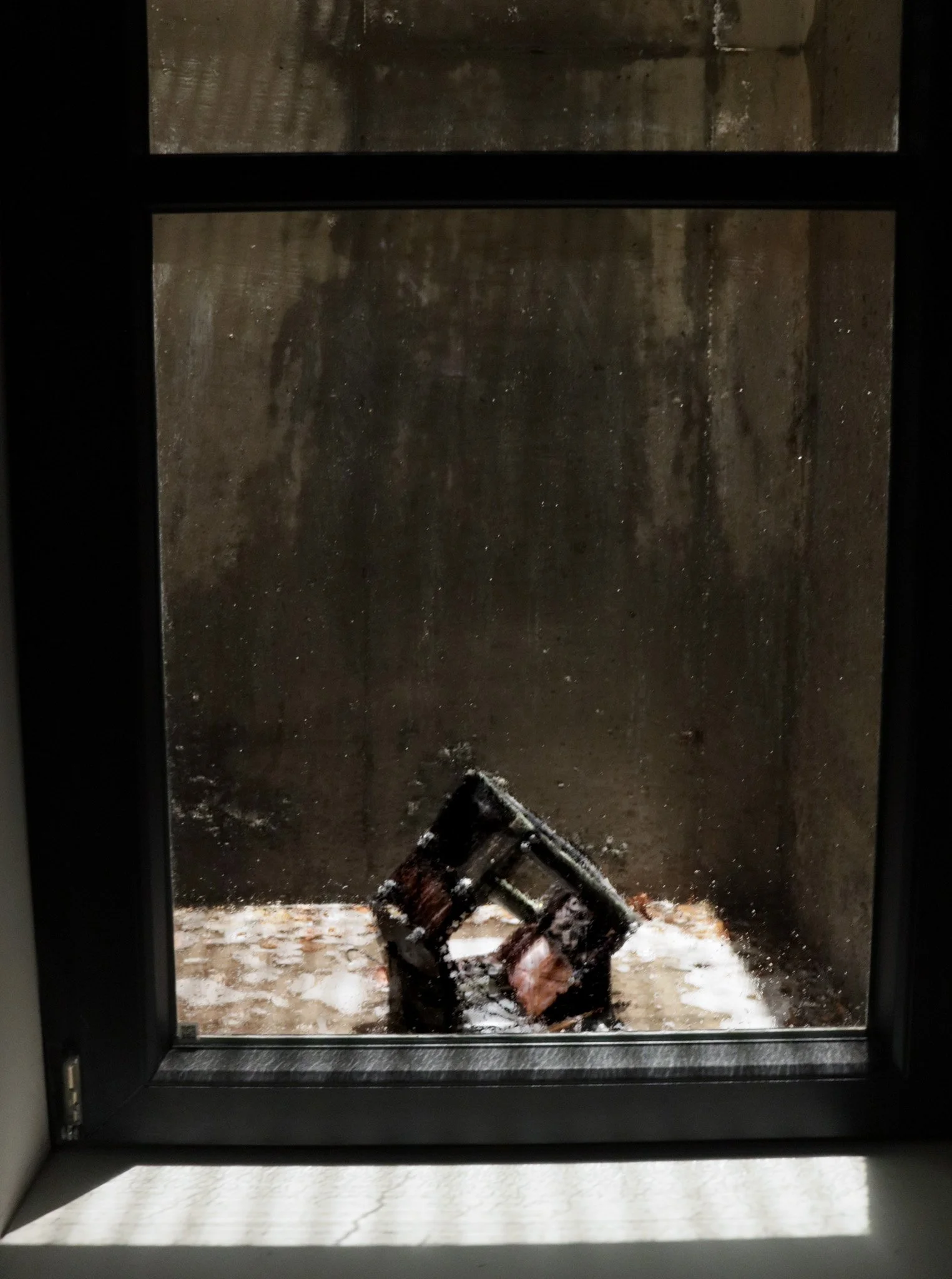
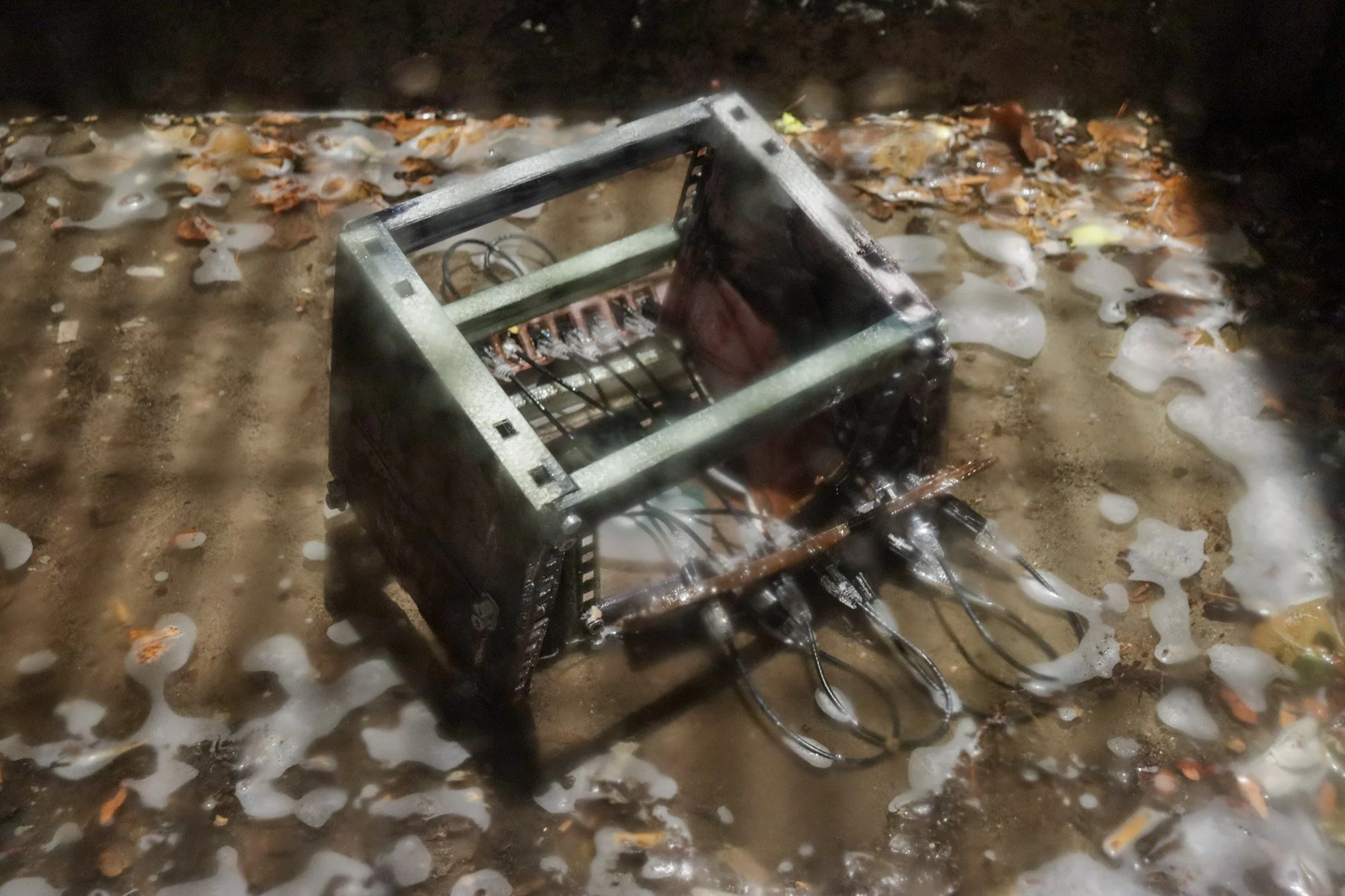
Cooling Infrastructure, 2026.
Polyvinyl alcohol, alcohol ink, ethernet patch cables, dc fan, photovoltaic cell. This water-soluble server rack nests a solar-powered CPU cooling fan.
Data centers house servers that support storage systems, cloud computing, machine learning, and "artificial intelligence." We are in a period of rapid increase in data center construction across the United States as part of the push for ubiquitous use of "artificial intelligence" platforms. While much of the ecological impact of "artificial intelligence" is the electrical use of powering servers, there is also heavy electrical usage in the cooling infrastructures within data centers to maintain servers. Small data centers use anywhere from 1 to 5 million gallons per day, roughly equivalent to the use of a small town. Centers exclusively for "artificial intelligence" have higher water demands than multi use data centers. While electrical companies use water to generate power for data centers, data centers directly use water to regulate humidity and temperature through a process called liquid cooling. This server rack mirrors the real servers it is designed to hold: it is vulnerable to temperature and humidity. As it rains, the rack falls apart and eventually dissolves. Contrary to the data center, 𝘤𝘰𝘰𝘭𝘪𝘯𝘨 𝘪𝘯𝘧𝘳𝘢𝘴𝘵𝘳𝘶𝘤𝘵𝘶𝘳𝘦 does not have a mechanism for regulating temperature or humidity. 𝘤𝘰𝘰𝘭𝘪𝘯𝘨 𝘪𝘯𝘧𝘳𝘢𝘴𝘵𝘳𝘶𝘤𝘵𝘶𝘳𝘦‘s vulnerability upheaves the server rack from performing its intended labor.
Exhibition view from the :/<repair exhibition at Ulises Bookstore in April of 2026.